
The Hang Seng Tech Index rebounded 3.23%, but liquidity, earnings divergence, and sector splits suggest Hong Kong tech stocks remain in a structural recovery phase.
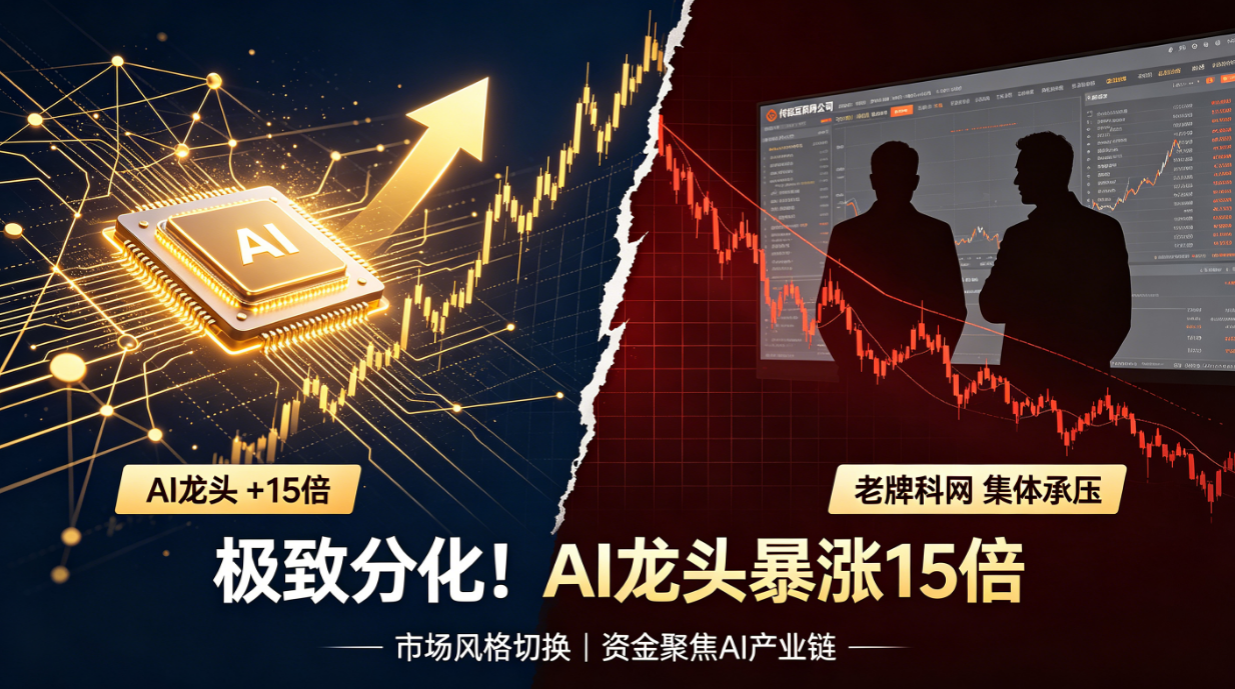
Hang Seng Tech Rebounds, But Structural Divergence Still Dominates the Market
Keywords: Hang Seng Tech Index, Hong Kong equities, AI chain, liquidity, earnings divergence, internet stocks, new energy vehicles, structural recovery
Introduction
On June 29, the Hang Seng Tech Index staged a much-needed rebound. After a prolonged period of adjustment, the index opened higher and kept rising throughout the session, closing up 3.23%. For investors who have watched Hong Kong technology stocks struggle for months, the move offered a brief relief rally. Yet when viewed against the full picture of the first half of the year, the rebound looks more like a technical recovery than a genuine trend reversal.
As of June 29, the Hang Seng Tech Index had fallen 20.36% year to date, placing it at the bottom of global technology market performance. More importantly, the index’s constituent stocks have displayed an extreme degree of divergence. A small group of AI-related names became the clear winners, while many of the traditional internet and new energy vehicle leaders that once defined the market continued to retreat sharply.
This split reflects more than a short-term rotation in investor preference. It reveals a deeper mismatch between the current structure of Hong Kong equities and the underlying economic and liquidity environment. The first half of the year showed that the market is not simply under pressure; it is being reshaped by a combination of sector composition, earnings expectations, and capital flow dynamics.
A Fragile Rebound After a Weak First Half
The June 29 rally should not be dismissed outright. In a market where sentiment has been under sustained pressure, any broad-based rebound in technology shares can trigger short covering and improve risk appetite. However, the scale of the recovery was too small to offset the losses already accumulated.
The Hang Seng Tech Index has been one of the weakest major technology benchmarks globally this year. That underperformance is striking because it comes at a time when global investors have shown strong interest in artificial intelligence, semiconductors, cloud infrastructure, and other hard-tech themes. In theory, those themes should have provided support to Hong Kong’s tech sector. In practice, the index has failed to benefit meaningfully from this global narrative.
The reason lies in the index’s composition. The Hang Seng Tech Index is still heavily influenced by large internet, e-commerce, consumer-platform, and electric vehicle names. These businesses are closely tied to domestic consumption and sentiment in the mainland economy. When internal demand remains subdued and expectations for broad-based recovery stay cautious, the index inevitably faces pressure.
That is why the late-June rebound, while welcome, has not changed the broader picture. It did not signal a full restoration of confidence. Instead, it highlighted how oversold the market had become and how selective buying could still spark a short-term bounce.
AI and Hard-Tech Names Became the Rare Winners
The most notable feature of the first half of the year was the extraordinary split within the same index. A small number of AI and hard-tech stocks delivered strong gains, attracting capital seeking growth visibility and policy alignment.
Among the standout performers, Zhipu, a leading large-model AI company, surged 1,588% in the first half. Other firms with strong hard-tech exposure also posted gains, including Hua Hong Semiconductor, MiniMax, and Lenovo Group, the latter benefiting from demand related to AI servers and infrastructure. These names became a kind of safe haven inside a weak market.
Their strength reflects several important trends. First, AI has become the clearest high-conviction growth story in the Chinese technology landscape. Unlike some consumer internet businesses that depend heavily on cyclical spending or traffic monetization, AI-related companies are positioned around productivity upgrades, enterprise applications, and infrastructure buildout. That makes them more attractive to investors looking for long-duration growth.
Second, these companies are increasingly linked to industrial policy and strategic technology development. In the current market environment, sectors that align with national priorities tend to receive more attention, especially when the broader economy is still in the process of recovery. Semiconductor manufacturing, AI model development, servers, and related hardware sit directly in that category.
Third, AI and hard-tech names are often less exposed to the immediate weakness in consumer sentiment. Even when domestic demand remains soft, investment in compute power, model training, and digital infrastructure can continue, supported by enterprise demand and long-term strategic planning. This helps explain why these stocks could rise even as the broader index remained under pressure.
Traditional Internet and EV Leaders Continued to Weaken
While AI-related names attracted capital, the former pillars of the Hang Seng Tech universe were hit hard. Tencent Holdings fell 29% in the first half. Alibaba, Meituan, and Kuaishou all dropped more than 30%. In the new energy vehicle segment, Xpeng declined nearly 40%, while BYD and Li Auto also lost more than 20%.
This is not merely a matter of valuation compression. It reflects a reassessment of growth quality and earnings visibility. For many of these companies, the market is now demanding clearer evidence of profit expansion, stronger cash flow generation, and more durable demand recovery. In the absence of such signals, even large and established names have struggled to hold investor interest.
The internet platforms face multiple pressures. Advertising growth is uneven, e-commerce competition remains intense, and consumer spending has not fully normalized. Meanwhile, regulatory expectations, though more stable than in the past, still encourage investors to remain selective rather than indiscriminately bullish.
The EV sector faces a different set of challenges. The industry remains strategically important and technologically dynamic, but competition is fierce, pricing pressure is intense, and demand growth has become more uneven. For listed automakers, scale alone is no longer enough to support valuation. Investors are increasingly focused on margins, product cycles, overseas expansion, and the sustainability of market share gains.
In short, the weakness of these former leaders shows that the market is no longer rewarding size or familiarity. It is rewarding visibility, structural growth, and credible technological differentiation.
Two Forces Behind Hong Kong’s Weakness: Fundamentals and Liquidity
Institutional analysis suggests that Hong Kong equities have been weak this year for two core reasons: fundamental divergence and tightening liquidity conditions.
The first is structural mismatch. Hong Kong’s heavyweight stocks remain highly concentrated in consumer internet, e-commerce, EVs, and new consumption themes. By contrast, the market has relatively low exposure to AI hardware, export-linked manufacturing, and other sectors that are benefiting from current industry trends. This means that even when some parts of the Chinese economy or global technology cycle improve, Hong Kong may not fully capture the upside. Instead, it continues to mirror the weaker segments of domestic demand.
The second force is the tightening of both domestic and overseas liquidity. Earlier in the year, many market participants expected a more favorable funding environment. The common view was that a weaker U.S. dollar, stronger foreign inflows, and increased southbound capital would support Hong Kong stocks. That expectation did not fully materialize.
The dollar remained more resilient than many had anticipated. Some overseas central banks shifted toward tighter policy stances. At the same time, southbound flows and foreign capital inflows both softened. The result was a market that lacked sufficient incremental liquidity support, especially for sectors that already faced earnings pressure.
This matters because Hong Kong equities have historically been highly sensitive to capital flow conditions. When liquidity is abundant, valuation-driven rallies can sustain themselves for longer. When liquidity is tight, however, the market becomes more discriminating. Capital moves quickly toward only the most compelling earnings stories, leaving the rest of the market behind.
What to Expect in the Second Half
Looking ahead, the consensus view among several strategists is that the second half may bring a modest improvement in earnings, but not a broad-based and synchronized rebound. Structural recovery is still possible, but it will likely remain uneven.
The most likely drivers of earnings growth are AI-related industries, upstream resource sectors, and a limited number of cyclical segments with clearer demand momentum. These areas offer stronger visibility and better alignment with current investment themes. By contrast, a full recovery in traditional consumption and the property chain will likely require a more convincing macro signal, including stronger household demand, improved confidence, and clearer policy transmission.
For the Hang Seng Tech Index, that means the next phase of the market will probably continue to be defined by dispersion rather than unity. Investors will need to separate genuine growth from headline scale, and policy-supported transformation from simple valuation rebounds.
In practical terms, the index may still experience sharp countertrend rallies when sentiment improves. But unless the earnings base broadens and liquidity conditions become more supportive, these rallies may remain tactical rather than strategic.
Conclusion
The Hang Seng Tech Index’s June 29 rebound offered a glimpse of stabilization, but not yet a change in regime. The first half of the year made one thing clear: Hong Kong technology stocks are no longer moving as a single block. AI and hard-tech names are gaining ground, while traditional internet and EV leaders continue to face structural headwinds.
This divergence is the defining feature of the current market. It reflects a mismatch between index composition and the most attractive growth opportunities, as well as the pressure from tighter liquidity and weaker domestic demand. For investors, the key lesson is that the market is entering a more selective phase. Future gains will likely come not from broad beta exposure, but from careful identification of the few sectors and companies with real earnings momentum.
In that sense, the Hang Seng Tech Index is not simply correcting; it is being re-priced around a new hierarchy of growth.